
Some places are simply crossed by bike. Then there is Tuscany, a region you truly experience on two wheels.
Cycling in Tuscany means entering a landscape that is constantly changing: hills shaped by rows of vines, quiet backroads linking parish churches and castles, villages that invite you to slow down and stop, and art cities to reach at just the right pace. Here, cycling is not just about sport. It is an authentic way to discover the region, its culture, its food and wine, and its unmistakable character.
Tuscany offers a wide network of routes through countryside, coast, hills, art cities and historic villages. It is precisely this variety that makes it such an inspiring destination for anyone dreaming of a cycling holiday in Italy.
- Why choose Tuscany for a cycling holiday
- What kind of bike holiday can you enjoy in Tuscany?
- The best places to cycle in Tuscany
- The best times to visit Tuscany by bike
- Recommended routes: road and gravel
- Who is cycling in Tuscany suitable for?
- Towns and villages to visit by bike in Tuscany
- In Tuscany, cycling also meets great food and wine
- Where to stay: Bike Hotels in Tuscany
Why choose Tuscany for a cycling holiday
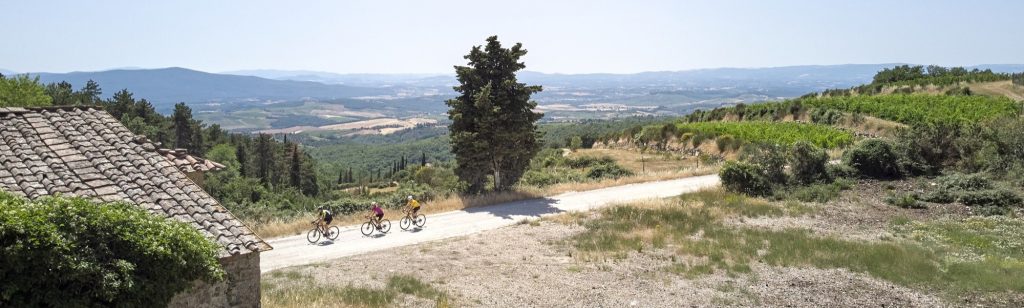
Tuscany is loved by cycle tourists because it brings many different experiences together in one destination.
On the one hand, there is its extraordinary landscape culture. Cycling through Chianti, the Val d’Orcia, the Crete Senesi, the Maremma or the Lucca area means riding through scenery that is instantly recognisable, iconic and never monotonous.
On the other, there is the cultural dimension. In just a few hours, you can move from quiet country roads to cities such as Lucca, Siena, Arezzo, Pisa or Florence, or reach beautifully preserved towns and villages such as Pienza, San Quirico d’Orcia, Montalcino, Montepulciano, Radda in Chianti, Gaiole in Chianti, Massa Marittima and Pitigliano. Many official routes pass through art cities, medieval towns, UNESCO areas and historic routes such as the Via Francigena.
There is another key reason too: Tuscany speaks to many different kinds of cyclists. It offers climbs and iconic routes for road cyclists, but also gravel tracks, white roads and long discovery routes for those looking for a gravel or bikepacking experience. It is no coincidence that this is the land of L’Eroica, one of the strongest symbols of Tuscan cycling culture, and the Tuscany Trail, a major contemporary reference point for the gravel and adventure cycling world.
What kind of bike holiday can you enjoy in Tuscany?

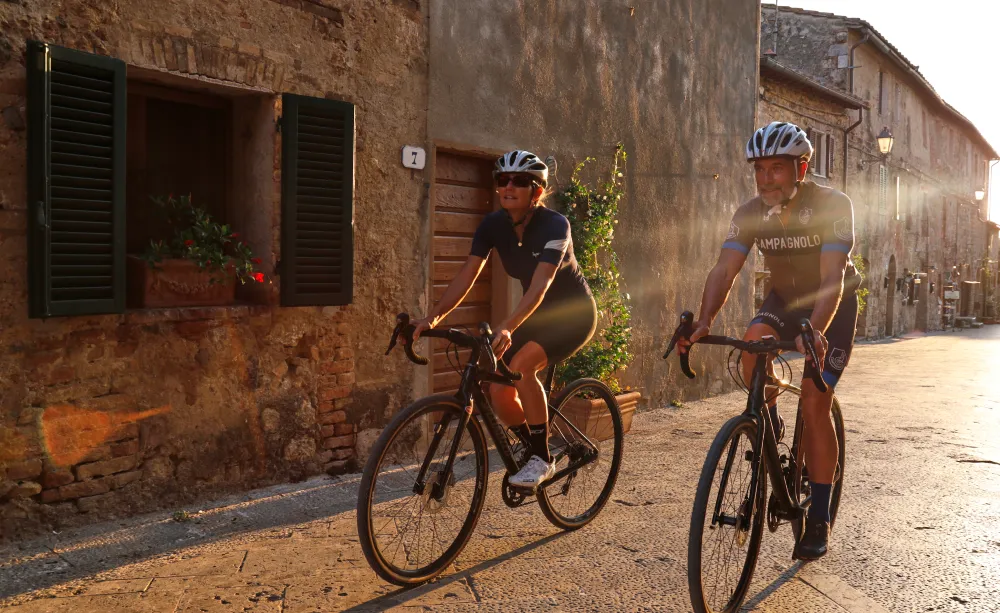
For those who want to train
If your goal is to ride consistently, tackle climbs, gain elevation and enjoy routes with a strong cycling identity, the best areas include Chianti, the Terre di Siena and the Val d’Orcia. Here you will find rolling roads, steady climbs, long scenic routes and, in many cases, less intrusive traffic than on the main urban roads.
For those looking for leisure cycle touring
If you see the bike as a way to explore the area at a slower pace, with stages, food stops and relaxed days in the saddle, areas such as Lucca and its plain, Versilia and Viareggio, parts of the Maremma and routes connected to the Via Francigena are particularly interesting. In these areas, it is easier to plan rides of around 25 to 60 km, with a gentle rhythm and a strong focus on landscape, culture and local experiences.
For e-bike riders
Tuscany is also very well suited to e-bike holidays, precisely because many of its most beautiful routes run through hills, quiet secondary roads and constant ups and downs. An e-bike allows you to enjoy highly scenic areas such as the Val d’Orcia, Chianti or the routes between Versilia and the inland hills with greater ease, making them accessible even to those who are not looking for a purely performance-based cycling holiday.
The best places to cycle in Tuscany
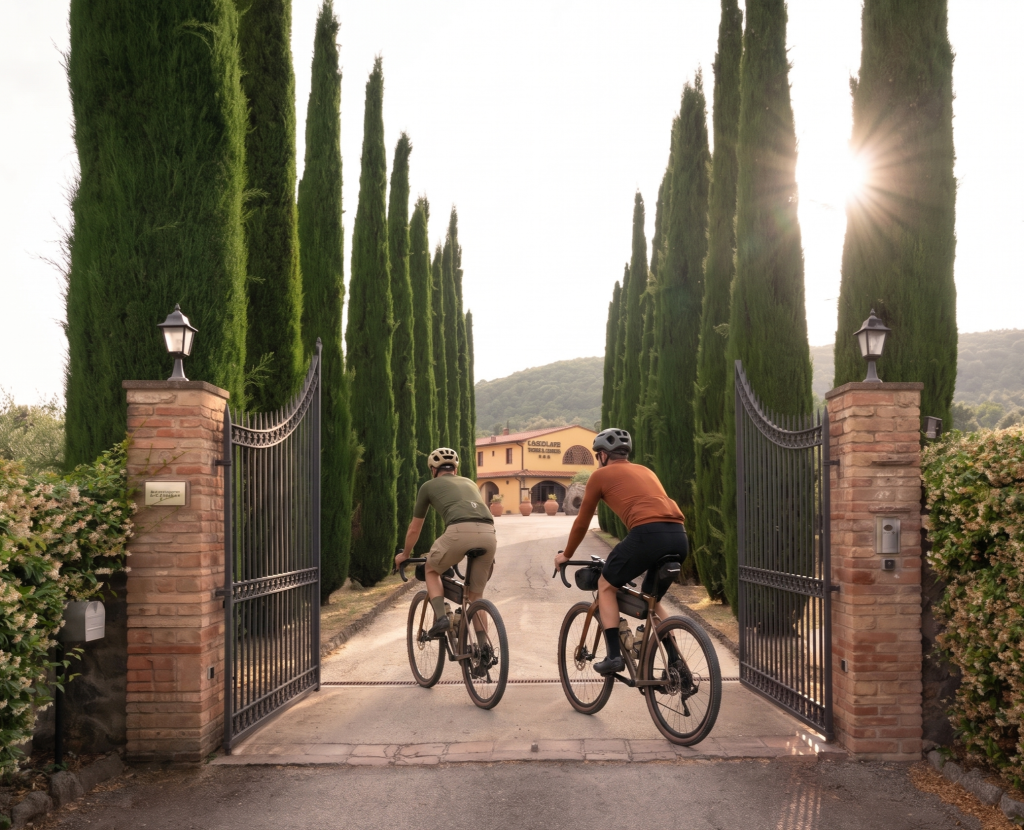
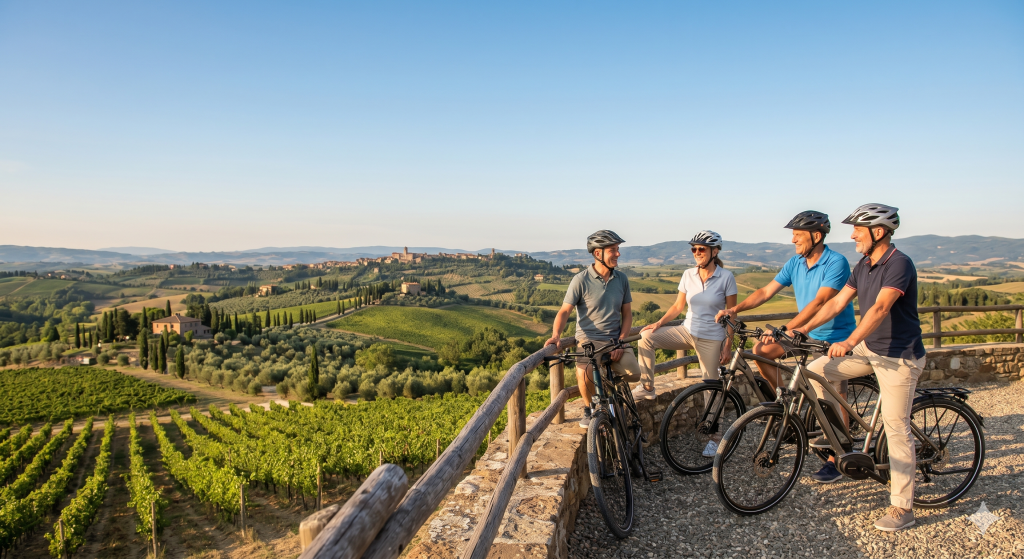
Chianti and the Terre di Siena
This is probably the most classic image of cycling in Tuscany: rolling hills, vineyards, cypress trees, Romanesque parish churches, castles, wine villages and roads that alternate between tarmac and gravel.
Cycling here means passing through places such as Radda in Chianti, Gaiole in Chianti and Castellina in Chianti, then continuing towards the Crete Senesi or the Val d’Arbia, in one of the areas most deeply connected with Tuscan cycling culture.
- Difficulty level: moderate to medium-high, mainly due to the constant rolling terrain.
- Ideal for: trained cyclists, road riders and gravel lovers.
- Recommended distances: 50–90 km for a full day’s ride, with the option of shorter loops.
- Surface: mostly tarmac, with the possibility of adding sections on white gravel roads.
- Traffic: generally manageable on secondary roads, but more noticeable on main connecting roads and during the busiest tourist periods.
Val d’Orcia
The Val d’Orcia is one of the most spectacular areas to experience by bike: gentle yet never predictable hills, panoramic roads, extraordinary villages and beautifully shaped white gravel sections. Places such as Pienza, Bagno Vignoni, San Quirico d’Orcia and Montalcino turn every ride into a true journey through the region. The landscape is magnificent, but it should not be underestimated: the rolling terrain and exposure to the sun can make rides more demanding than they may first appear.
- Difficulty level: moderate.
- Ideal for: road cycling, gravel, e-bike riders and cycle tourists looking for scenery and historic villages.
- Recommended distances: 35–70 km, ideally with stops along the way and early starts during the warmer months.
- Surface: mixed, with scenic tarmac roads and white gravel roads.
- Climate and logistics: in summer, it can get very hot in the middle of the day, so it is best to set off early.
Lucca and its plain
Lucca is perfect for those looking for a gentler approach, or for anyone who wants to combine cycling with cultural visits. The city walls can be explored by bike, while the Lucca plain offers routes suited to different riding styles, passing historic villas, waterways, orderly countryside and small towns. This is a softer side of Tuscany, but by no means a lesser one.
- Difficulty level: easy to moderate-easy.
- Ideal for: slow cycling, e-bike riders, couples and active families.
- Recommended distances: 20–60 km.
- Surface: mainly tarmac and cycle paths.
- Logistics: a very convenient base, especially for those who want to alternate cycling with time spent visiting the city.
Viareggio and Versilia
Viareggio also deserves a place among the most interesting areas to experience by bike in Tuscany, especially for those looking for something different from the hillier landscapes of the inland areas. Here, cycling meets the sea, pinewoods, seafront avenues and a landscape that, within just a few kilometres, brings together beaches, natural areas, small towns and hills, with the Apuan Alps in the background.
From Viareggio, you can ride towards Torre del Lago through coast and greenery, or follow the routes along Versilia, where a network of cycle paths connects seaside resorts and places of interest. It is an ideal area for those who want to alternate relaxed rides and active recovery days by the sea, while still having the option to head inland for more varied and undulating routes.
- Difficulty level: easy along the coast, moderate if you climb towards the inland areas.
- Ideal for: bike-and-sea holidays, road cycling and e-bike rides.
- Recommended distances: 20–50 km for easier outings; longer rides are possible when combining the coast with the inland hills.
- Surface: cycle paths, tarmac, and some natural or light gravel sections through the pinewoods.
- Traffic: the coastal area often offers cycle paths. Inland routes should be planned carefully, favouring secondary roads.
Maremma
The Tuscan Maremma has a different character: more open, wilder and more Mediterranean. Here, you cycle through hills, scrubland, sea, natural parks and stone villages. From Grosseto, there are long loop rides and routes that reach the coast, the inland areas and places of great charm such as Massa Marittima, while the Maremma Regional Park adds a strong nature-focused dimension.
- Difficulty level: variable, from moderate-easy to moderate.
- Ideal for: discovery-focused cycle touring, gravel riding, e-bikes and scenic road cycling.
- Recommended distances: 40–80 km.
- Surface: tarmac, secondary roads and natural sections in some areas.
- Climate: very pleasant in spring and autumn; in summer, it is best to set off early.
Via Francigena in Tuscany
For those who love multi-stage journeys, the Via Francigena remains one of the great routes to consider. It crosses Tuscany from north to south, bringing together history, nature, spirituality, landscapes and small towns. It is perfect for anyone who wants their cycling holiday to feel more like a journey, with a strong narrative dimension, rather than focusing only on performance. In its Tuscan section, the historic route covers around 380 km and can also be tackled by bike, over several stages, linking Lucca to Radicofani.
- Difficulty level: moderate, but it depends greatly on the stage chosen and the type of surface.
- Ideal for: gravel, MTB, e-bike and multi-day cycle touring.
- Recommended distances: 30–60 km per day for an enjoyable journey.
- Surface: mixed, with some sections that are not always perfectly smooth or fast-flowing.
- Logistics: ideal for those who enjoy travelling in stages and staying in different places along the route.
The best times to visit Tuscany by bike
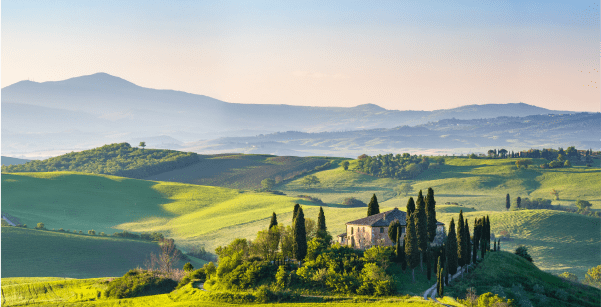
Tuscany is suitable for cycling for much of the year, but the best periods are generally spring and early autumn.
- April, May and June: the landscape is full of life, the days are longer and the temperatures make both road rides and gravel routes enjoyable.
- September and October: the light changes, the colours become more intense and cycling among vineyards, hills and villages takes on a special charm.
- Summer: still a valid option, especially in areas such as Versilia, the coast, or places where you can set off very early. However, in the more exposed inland areas, the heat can have a significant impact on the quality of the ride.
- Winter: some coastal and flatter areas remain interesting for more relaxed rides, while the hilly areas require greater attention to the weather.
Recommended routes: road and gravel
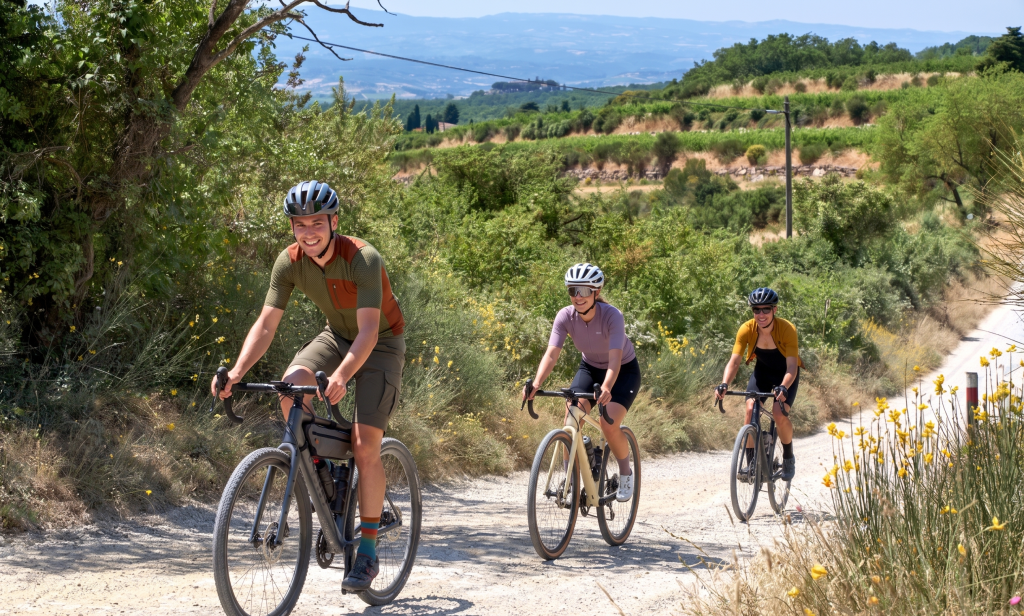
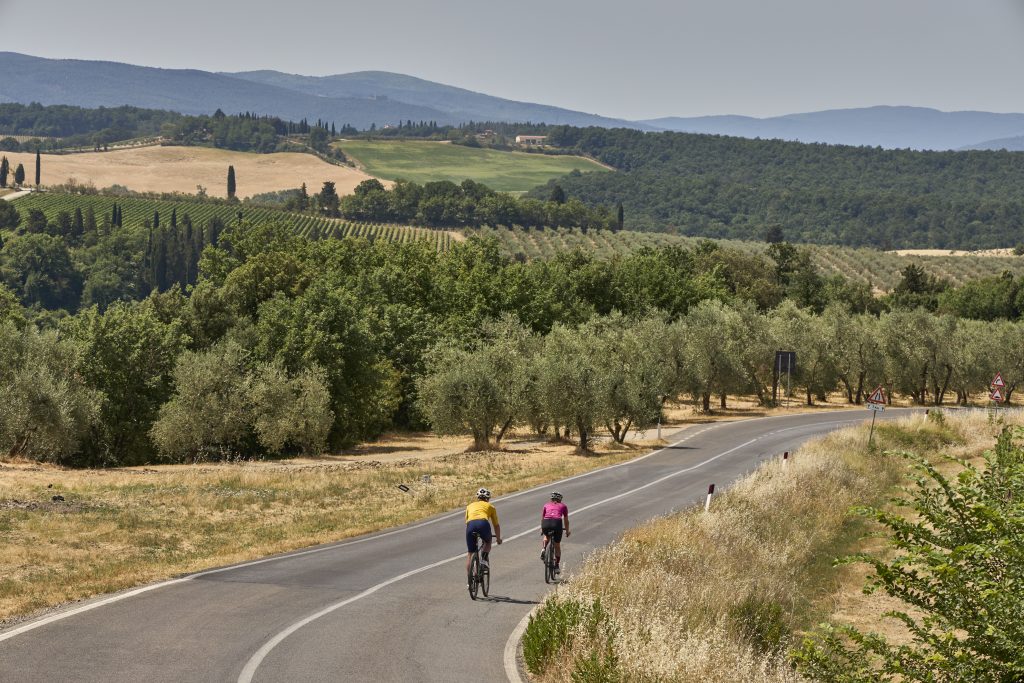
To help you plan your cycling holiday in Tuscany, we have selected a series of recommended road and gravel routes designed to let you experience the region in different ways: through hills, villages, white gravel roads, iconic landscapes and routes with varying levels of difficulty.
In our collection, you will find useful inspiration both for those looking for more sport-focused rides and for those who prefer to cycle at a more relaxed pace, leaving plenty of room to enjoy the scenery and the places they pass through.
Want to discover Tuscany by gravel bike?
We have created a dedicated guide to gravel cycling in Tuscany, with routes, recommended areas and useful tips for riders who love white gravel roads and mixed-terrain routes: you can read it here!
Who is cycling in Tuscany suitable for?
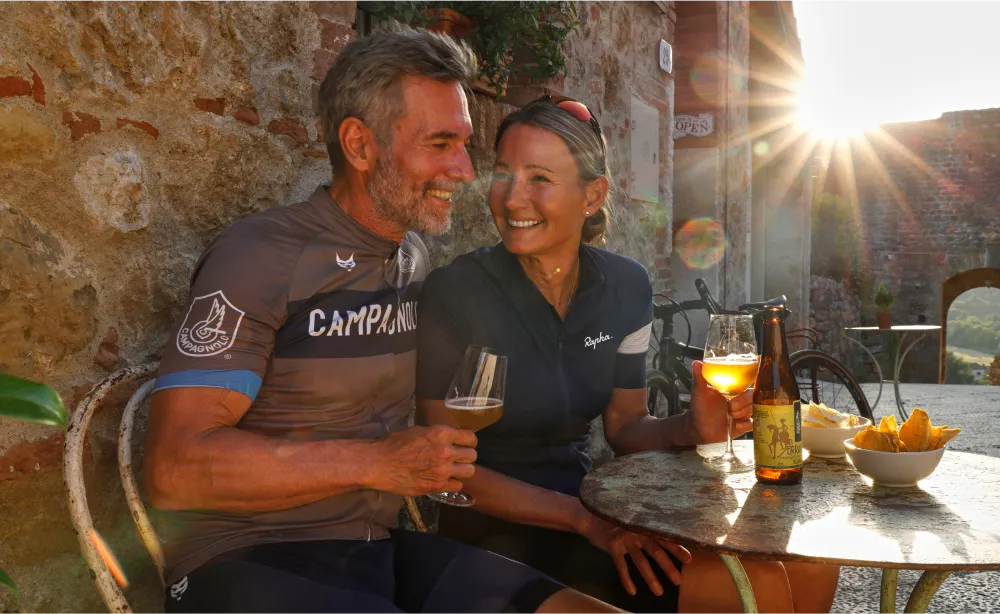
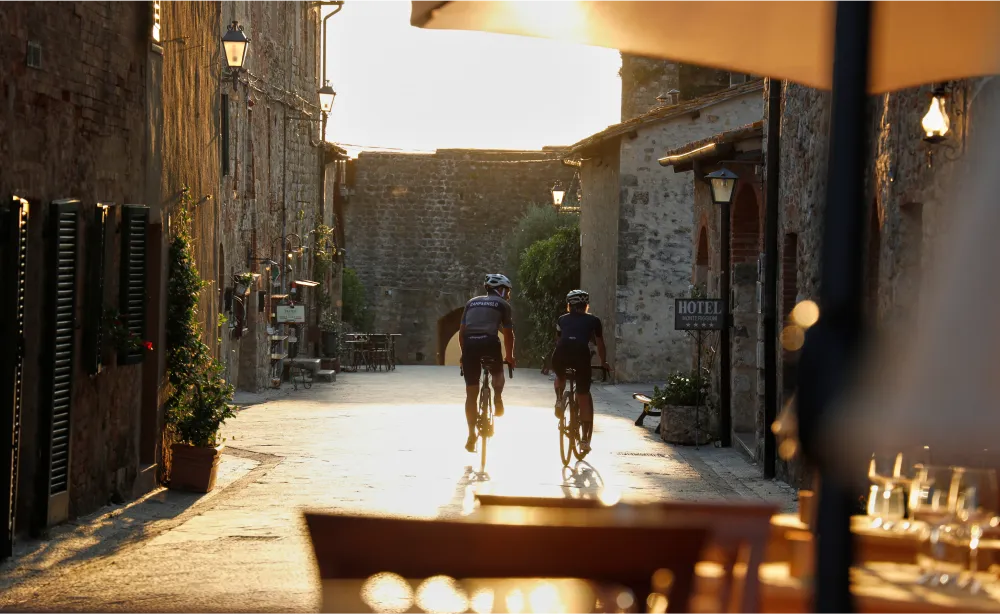
Choosing a cycling holiday in Tuscany means choosing a destination that brings together landscape, culture, sport and the pleasure of travel like few others.
It is perfect for cyclists who want to train on roads with real character or on iconic white gravel roads; for travellers who love villages and scenery; for couples or families dreaming of an active yet relaxed holiday; for e-bike riders who want to enjoy the region without being obsessed with performance; and for anyone wishing to combine cycling, culture, wine, food and Italian beauty in one single journey.
It is an ideal destination for:
- those who want to train by bike, with rolling terrain, scenic roads and routes with elevation gain;
- road cyclists looking for iconic routes through hills, villages and famous landscapes;
- gravel riders attracted by white gravel roads, mixed-terrain routes and a spirit of exploration;
- e-bike riders who want to experience the area with greater freedom, tackling hilly sections with more confidence and enjoying stops in villages, wineries and scenic spots;
- couples looking for an active but relaxed holiday, with panoramic rides, small art cities, good food and local wines;
- active families, especially in more accessible areas such as Lucca, Versilia or some parts of the Maremma, where it is easier to combine cycling, discovery, nature and relaxing moments by the sea;
- bike travellers who love building multi-stage routes between villages, art cities and ever-changing landscapes.
In Tuscany, cycling is not just a way to get around: it is the best way to enter the landscape, the villages, the flavours and the local way of life.
Towns and villages to visit by bike in Tuscany
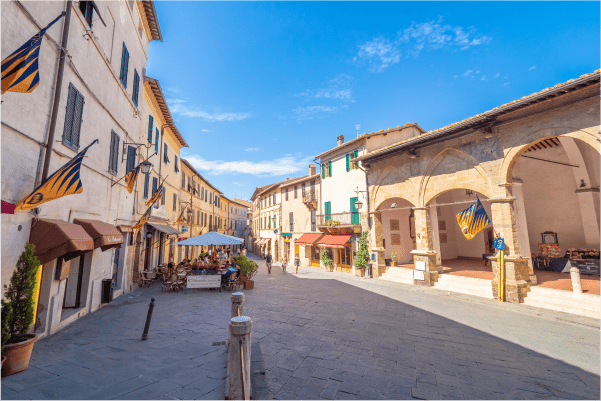
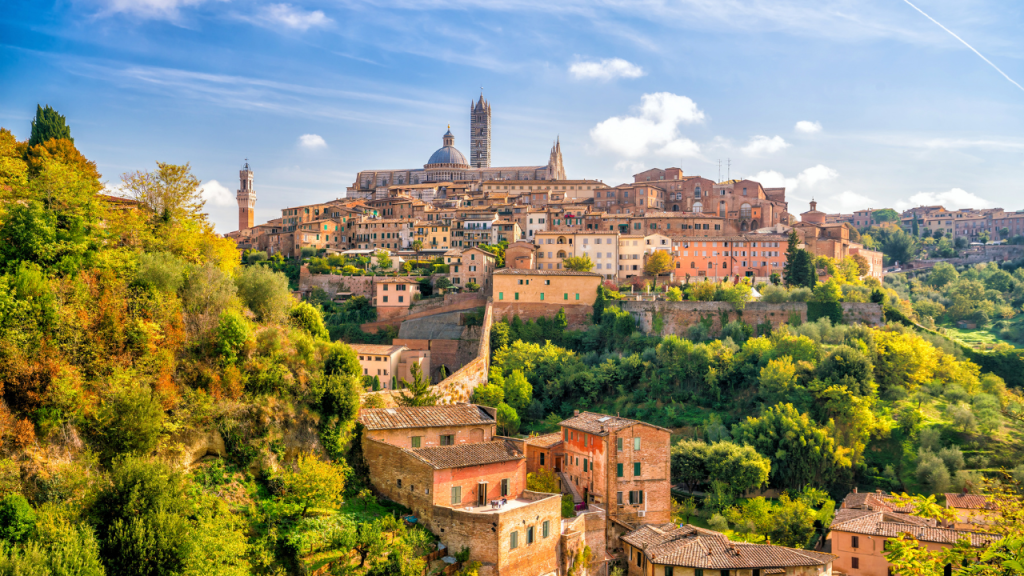
One of the great reasons to choose Tuscany for a bike holiday is that here the bike becomes the perfect way to connect beautiful places. You can ride towards Lucca, cycle along its city walls and then head out into the surrounding countryside. You can reach Siena along scenic roads and then stop in one of Italy’s most iconic squares, Piazza del Campo. You can plan a day between Pienza, Bagno Vignoni and San Quirico d’Orcia, or create an itinerary linking Radda, Gaiole and Castellina in Chianti.
And there is more: Montalcino, Montepulciano, Massa Marittima, Pitigliano, as well as larger cities that can become part of a wider travel experience, such as Pisa, Arezzo and Florence. Many of Tuscany’s major official routes are designed precisely to combine cycling with visits to medieval villages and art cities.
In Tuscany, cycling also meets great food and wine
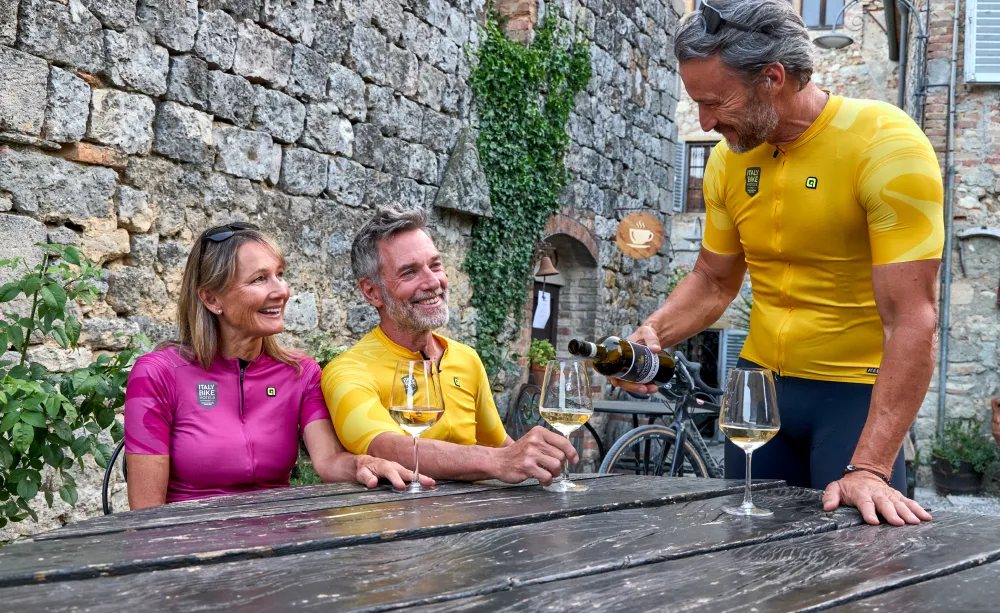
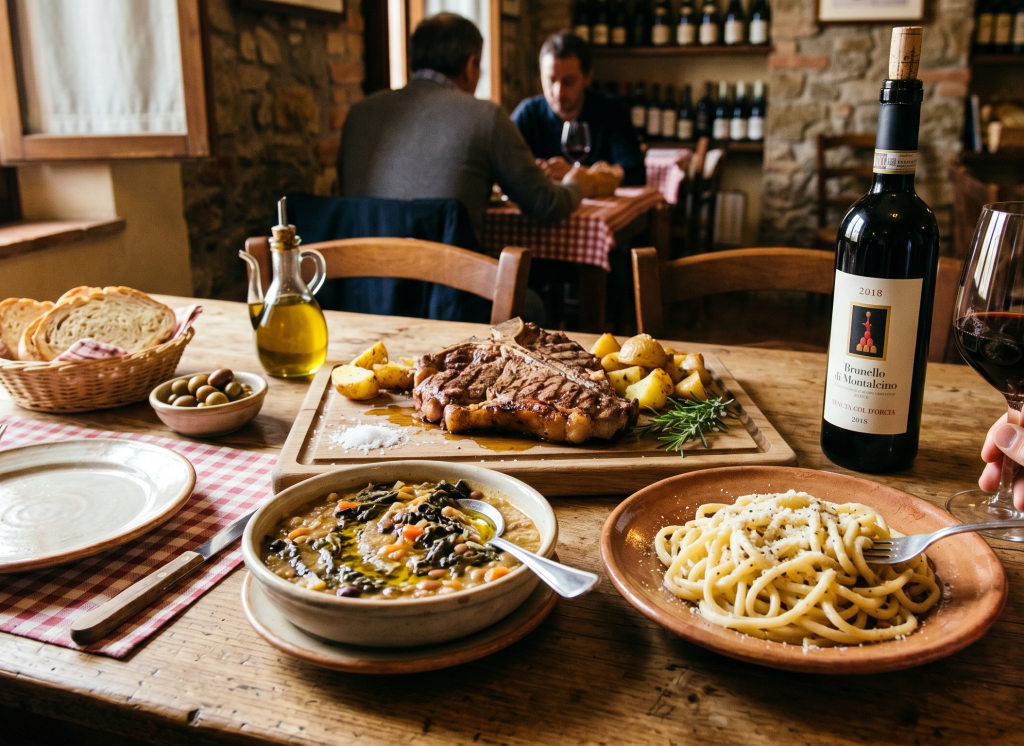
There is one more reason to choose this destination: in Tuscany, you can ride beautifully, but you can also eat and drink exceptionally well. Here, food and wine are not simply an extra part of the journey: they are an essential part of the experience. After a day spent among hills, villages, vineyards and white gravel roads, sitting down at the table means going even deeper into the identity of the region.
Tuscan cuisine is honest, intense and deeply rooted in the land. Among the flavours not to miss are some of its great classics. Ribollita is a rustic soup made with bread, cavolo nero, beans and vegetables, and is one of the most traditional dishes of Tuscan cooking. Pici are a typical handmade fresh pasta, similar to thick spaghetti, especially common in the Siena area and often served with traditional sauces. Alongside these, there are other representative dishes such as bistecca alla fiorentina, fagioli all’uccelletto, traditional cured meats and local cheeses, starting with pecorino.
And then, of course, there is the wine: another major protagonist of any journey through Tuscany. Names such as Chianti Classico, Brunello di Montalcino, Vino Nobile di Montepulciano and Vernaccia di San Gimignano are not just famous labels, but true expressions of the landscape and local culture.
For international travellers, all this makes a cycling holiday in Tuscany even richer: not only for the roads to ride, but also for the pleasure of stopping in a village, sitting down at the table and tasting Tuscany through its most authentic flavours.
Where to stay: Bike Hotels in Tuscany
To make the most of a cycling holiday in Tuscany, choosing the right hotel can make a real difference. A genuine bike hotel is not just a place to sleep, but a convenient, well-equipped base from which to set off every day and explore the area by bike. Secure bike storage, dedicated services for cyclists, knowledge of local routes and attention to the needs of riders all help make your stay easier, more enjoyable and better organised. Here, you can discover the Bike Hotels in Tuscany and find the property best suited to your style of holiday.
Discover Bike Hotels in Tuscany
 9.7 / 10
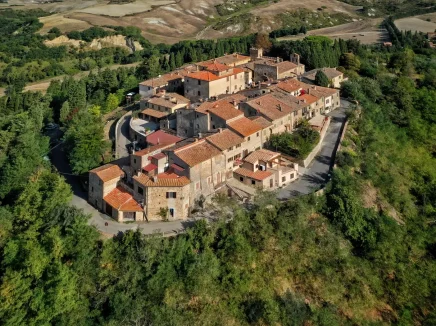
Volterra, Tuscany
01/03 – 31/10
9 / 10 4.5 / 5
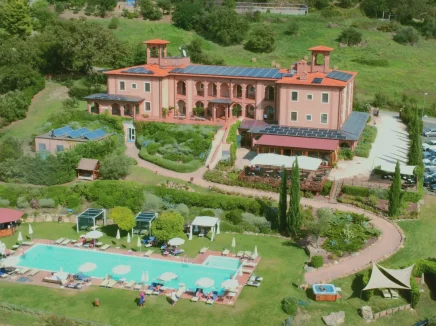
Poggio Murella-Saturnia, fraz. di Manciano, Tuscany
20/03 – 08/12; 27/12 – 06/01/27
9 / 104.5 / 5
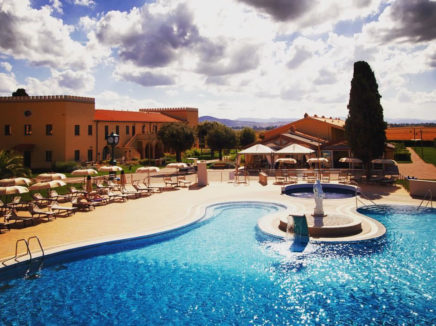
Riotorto, Tuscany
9 / 104.5 / 5

Asciano, Tuscany
Open from 01.01.2026 to 31.01.2026, from 01.03.26 to 31.10.26 and from 01.12.26 to 31.01.27
4.5 / 5
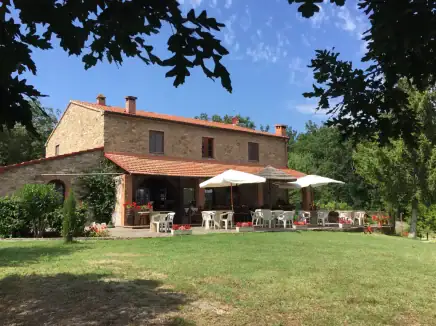
Sassetta, Tuscany
from late March to late September
9 / 104.5 / 5
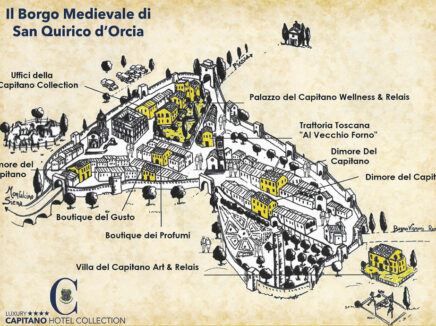
San Quirico d’Orcia, Tuscany
Open all year round
9.2 / 104.5 / 5

San Ronco a Pilli, Tuscany
Open all year round
8.4 / 104 / 5

Viareggio, Tuscany
Open all year round
8.2 / 104 / 5
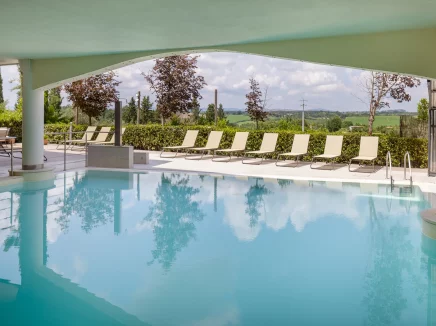
Asciano, Tuscany
Annual
8.9 / 104.5 / 5
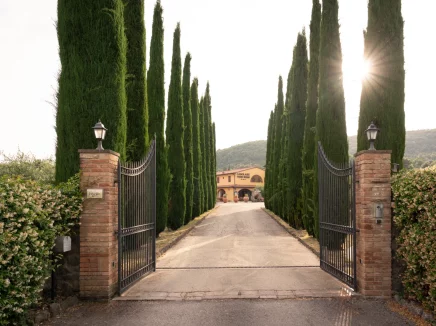
San Gimignano, Tuscany
Open from 26.03.26 to 01.11.26
© All rights reserved